Friday, May 22, 2015

The Revolution Will Not Be Televised

1. Do Now | Quick Write: Open today's document. Using the table, make a quick bullet list of the characteristics and actions that of Che the Hero vs. Che the Villain. Then, use the examples you list to explain why some people celebrate him as a revolutionary and others condemn him as a murderer. Finally, explain your personal point of view-- where do you stand on the matter? (7-10 sentences only)

2. Vocabulary | Put the following definitions in your own words

  • coup d'tat
  • socialism of the 21st century
  • Bolivarianism 
  • Bolivarian Revolution
  • Chavismo


3. Fast Facts about Hugo Chavez:

4. The Revolution Will Not Be Televised 

Monday, May 11, 2015

Latin Revolutionaries | Che- Hero, Villian, or Both?


1. Do Now: Make a copy of today's handout. Then, answer the question: What do you know about Che Guevara?

2. Together, we will discuss important terms relating to the study of Che and you will put them into your own words.

3. Together, we will watch The True Story of Che Guevara and discuss:
  • Che's early life and the experiences that influence his later ideologies
  • Che's interest in revolutions and his role in Fidels Castro's rise to power in Cuba.
  • Make connections between Che and revolutions in Chile, Guatemala, and Cuba-- and those in the Middle East and Africa over the past century. What do these revolutions seem to be a response to? What is the proposed solution?
  • Is Che a Hero, a villian... or both? Why?

Homework: Study geography of Asia. Test on Thursday/Friday.

Monday, April 27, 2015

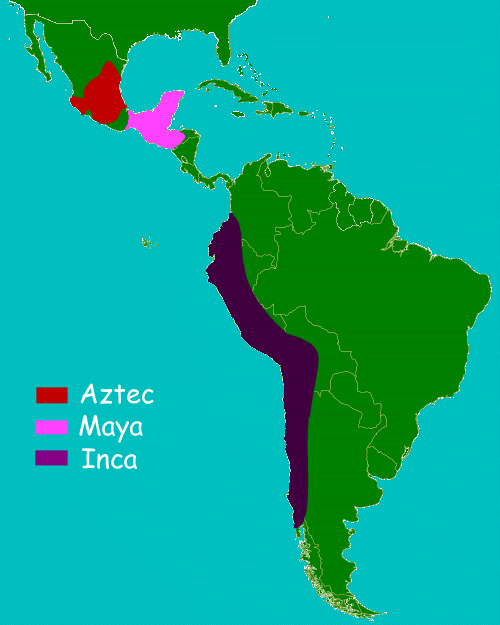
Mesoamerican Empires Project

Tributes! Part of learning about Human Geography is to look at human impact on each other, the land, and their lasting impact upon our lives today. We will explore three civilizations with research you will conduct yourselves. Each student in your group will play an integral part in developing a group Prezi or a video of the Aztec, Mayan and Incan civilizations. You have the opportunity to learn about the history, geography, culture, contributions and decline of these people, as well discover the roots of the 19th century revolutions in Latin America that we will study next week! 

1. Make a copy of your Latin Empires Project Guide. We are going to clarify the assignment, and discuss expectations.

2. You will work in assigned groups to:

  • Research the location, agriculture, government, daily life, religion, trade networks, achievements in architecture, agriculture, academics, etc. and decline of the civilization. 
  • Create a Prezi , Voicethread, or video presentation.

3. You have the rest of the day to agree on a plan and work on research.
  • Group Research Plan: Come up with a plan for how research will be done, and schedule internal due dates for your team. Each member(s) of your team may research an individual topic OR divide your group into smaller groups to research larger sections. This needs to be decided immediately, at the beginning of the period.
  • Remember to keep a list of each resource you use and begin to build a bibliography, using MLA format. I recommend building shared resource list for the group, called Latin Empires Resource list.
  • Research: Search the websites provided and/or valid sources you discover on your own to find information about the area of society you are investigating. Record interesting and specific information. Discuss and share all findings with your team.
4. Wednesday, you will have the period to combine your information into a final presentation.

5. Thursday/Friday we will use a lottery to determine who presents.

Friday, April 24, 2015

SUB | Aztecs Pop Quiz

Intro to Aztecs Pop Quiz

All open-ended answers should be in full, complete detailed sentences with evidence for their claims--high school level, at a score of 3 or 4 quality. Use the question in the answer and make sure you define pronouns (he, she, it, they) before you just start talking about them.

For immediate technical problem have Ms. Pulido or the class TAs text me.

If there is something less urgent you need to communicate with me, send me an email. I'll be up in the mountains and hopefully will get reception on my phone. If you don't hear from me, I'll return emails when I have cell service.

Have a fantastic day!

Ms. Kelly

Wednesday, March 25, 2015

Benchmark 3


Part 1 & 2. Geography & Vocabulary

Part 3. Hand-Written Essay with Rubric

In recent months, the United States has been experiencing a resurgence of debate around the concept of racism and prejudice. In your essay, discuss the following:

  • Develop an introduction paragraph
  • Define the concepts of race, racism, institutional racism, and prejudice.
  • Compare & Contrast our case studies: Michael Brown and Eric Garner.
  • Critique the Grand Jury decisions of each cased based on the facts that you know, justifying or refuting their decision with factual evidence.
  • Connect police brutality to population demographics, justifying proposed solutions designed to end institutional racism in the police force.
  • Synthesize everything you've discussed into a closing paragraph.

Friday, March 13, 2015

Equality vs. Stratification

Standard:

Cultural Patterns and Processes (13%–17%)
  • Concepts of culture 
  • Cultural differences and regional patterns 
  • Cultural landscapes and cultural identity 
    • Understand how cultural values, political regulations, and economic constraints work together to create particular landscapes. Economic 
Objective:
  • Students will analyze the economic constraints of a stratified society by playing Tradition Monopoly and a modified version, called Sociopoly.
  • Students will apply their experiences with Traditional and Inequality Monopoly, to understand and explain the difference between a society based on quality and one that is stratified.

Step 1 | Do Now: 
On a piece a of paper answer the following:

  • What was the point of Wednesday's Privilege Walk?
  • Are all people equal in America? Explain with examples.
Step 2 | Monopoly 
  • Play Monopoly by the Traditional Rules (Do not open the white envelope)
  • Complete the chart as you play
  • When Ms. Kelly announces the game is over, complete the net worth chart and reflection questions on the back.
Step 3 | Sociopoly

  • Each player roll the dice. Player with the highest number, open the white envelope and up to Order of Play. Wait for further instruction.
  • When instructed, read the rest of the rules. Upper class, read the additional rules to yourself, and do not read them to the others until you want to, once the game is in play.
  • Complete the chart as you play
  • When Ms. Kelly announces the game is over, complete the net worth chart and reflection questions on the back.
Step 4 | Exit Slip

Step 5 | Discussion Questions
  1. What was the difference in economic constraints (money problems) during the tradition monopoly game vs the sociopoly?
  2. What are features of a society based on equality?
  3. What are features of a stratified society?
  4. Which society most closely resembles that of the U.S.?


Wednesday, March 11, 2015

Privilege Walk

  • This Unit has primarily focuses on social class and the components that comprise class disparities. We have touched on familial background, education, race/ethnicity, citizenship, gender, sexual orientation, and ability. 

  • Today's activity is about privileges we have/or don't have and may not recognize. Through indicating whether an individual identifies with certain statements, it is possible for us to recognize the privileges that they/we have been granted/denied and to learn about the backgrounds of their peers. 

  • Students who feel uncomfortable with sharing may choose to sit out. Talking about privilege and personal experiences may bring up strong emotions. This is a normal response and you have the space to share.

  • Objectives: After participating in this activity, students will be able to recognize the inequalities that exist in society, especially relating to social class. It will help participants to acknowledge their privileges, contextualize their own experiences, and learn about their peers. We will discuss our experiences in this activity and apply it to our lives to support awareness of inherent inequities in our society.
Activity | Privilege Walk
    1. Take a step forward if one of your parents graduated from a 4-year university.
    2. Take a step forward if one of your siblings is in and/or graduated from a 4-year university. 
    3. If you have both of your biological parents living in your home with you, take one step forward.
    4. If you have visible or invisible disabilities take one step backward.
    5. If you are a white male, take one step forward.
    6. If you when you watch television you mostly see members of your race, ethnicity, or sexual orientation take one step forward.
    7. If there were more than 50 books in your house when you grew up, take one step forward.
    8. If you have even been called hurtful names because of your race, ethnicity, gender, sexual preference or skin color, take one step back.
    9. If your parents have ever brought you to art galleries, museums or plays, take one step forward.
    10. If you live now, or have ever lived in a home where drugs are sold on the street or near your home, take one step back.
    11. If you ever had to skip a meal or were hungry because there was not enough money to buy food when you were growing up, take one step back.
    12. If you are able to avoid communities or places you feel are dangerous, take one step forward.
    13. All those who have a parent that never completed high school, take one step back.
    14. If your parents were professional, doctors, lawyers, etc., take one step forward.
    15. If your family has always had health insurance take one step forward.
    16. If you were taught in-depth about the history and culture of your personal ethnic ancestors in school, take one step forward.
    17. If you were born in the United States take one step forward.
    18. If you attended a private school or private summer camp, take one step forward.
    19. If one of your parents was unemployed or laid off, not by choice, take one step back.
    20. If you were ever encouraged to attend a college by your parents, take one step forward.
    21. If you have been seriously ill or are often ill, take a step back.
    22. All those who have been stopped or questioned by the police or other persons about why you are in a particular neighborhood, take one step back.
    23. If you ever had to rely primarily on public transportation, take one step back.
    24. All those whose ancestors lost a war with the US and whose land was made a part of the US, take one step back.
    25. If English is your first language take one step forward.
    26. If you believe you will have to take out loans to fund your education take one step backward.
    27. If you ever attended private school take one step forward.
    28. All those who went to a school where the majority of teachers are your race or ethnicity, take one step forward.
    29. If your family ever had to move because they could not afford the rent or their house payment, take one step back.
    30. If your family owns your own house, take one step forward.
    31. If you ever inherited money or property, take a step forward.
    32. If you have ever felt unsafe walking alone at night take one step backward.
    33. If you ever tried to change your appearance, mannerisms or behavior, the way you look or speak to avoid being judged or ridiculed, take one step back.
    34. If you were raised in an area where there was prostitution, drug activity, etc., take one step back.
    35. If you were generally able to avoid places that were dangerous, take one step forward.
    36. All those who have immediate family members who are, or have been in jail or prison for more than one week, take one step back.
    37. If you were ever discouraged from academic pursuits or jobs because of race, class, ethnicity, gender or sexual orientation, take one step back.
    38. All those who were raised sharing their bedroom with another person take one step back.
    39. If you were ever offered a good job because of your association or connection with a friend or family member, take one step forward.
    40. If prior to your 18th birthday, you have taken a vacation outside the United States (or your native country), other than Mexico, take one step forward.
    41. All those who were raised in a community where the vast majority of the police, politicians, and government workers were NOT of your gender, racial or ethnic group, take one step back.
    42. If you or any member of your family has been treated for depression, alcoholism or drug abuse, take one step back.
    43. If your parents told you that you could be anything you wanted to be, take one step forward.

Processing Questions:
  • What is your “gut reaction” to where you find yourself at the end of this list of privileges?
  • Are you surprised at where you are? 
  • How does it feel to be in front? In the middle? In back? 
  • Did you come to any new realizations? 
  • If so, which one had the most impact?

Closing Statement:
It is important to recognize that everyone has a unique experience in life. There are some people who have been more privileged than you and some that have been less privileged. By recognizing this fact, we are able to avoid judging others. We can also see what privileges society has given us, and/or what we have overcome to be where we are. It is important to be grateful for the experiences that have been given to us, but to also recognize the societal structures that may have contributed to these. Although it is important not to talk about the specific experiences that were shared outside of this group, talking about what you learned is the key to helping to make a change in society. 

Monday, March 9, 2015

Africa & U.S. Geography Retest Prep

1. Review Geography for this week's retest. 
  • This week: Africa & U.S. Retest next Thursday 3/12 & Friday 3/13
  • Up Next: South America 3/19 & 3/20
  • Retake: (during Student Support on Wed or after school on Thursday): Middle East & Europe
3. Cultural Patterns: Racism & Prejudice--> New/Used Vocabulary for current unit.

4. Choose 10 new vocabulary words from Cultural Patterns: Racism & Prejudice (not the same from last week)
. Put them into a sentence, with an example. This may require some Googling. Post in TODAY's comments section.

Monday, March 2, 2015

Catch-Up & Study!

1. If you haven't already, finish What in the World is Going On? Document and the Prezi on your article. Submit it in the February 23rd comment's section.

2. Review Middle East & Europe Geography for this week's retest. 
  • Retest: Middle East & Europe this Thursday 3/5 & Friday 3/6
  • Retest: Africa & U.S. Retest next Thursday 3/12 & Friday 3/13
  • New Test: South America 3/19 & 3/20
3. Cultural Patterns: Racism & Prejudice--> New/Used Vocabulary for current unit.

4. Choose 10 vocabulary words from Cultural Patterns: Racism & Prejudice. Put them into a sentence, with an example. This may require some Googling. Post in TODAY's comments section.

Monday, February 23, 2015

What in the world is going on?

1. Complete the survey about using technology in this class.

2.  Find an article from an online newspaper source, such as Time.com, USA Today, The New York Times, The Los Angeles Times, etc, or any other reputable (trustworthy) national or local source. Look for an article that relates to racism, prejudice, abuse of authority by a person in a position of power. If that doesn't interest you, look for an article that relates to South America that you can use to propose our next unit. Reserve your article.


3. What in the world is going on? Read the article, become an expert on it by completing the worksheet using full and grammatically correct sentences

Tuesday, February 17, 2015

Crash Reflection | Digital Peer Editing

1. Do Now: Open your Crash Reflection in your Google Docs.

2. Take your paper and write 1 on one side and a 2 on the other.


3.  Write your gmail on 1 person's side 1 only.


4. Write your gmail on 1 person's side 2 only.


1 = your editor for today.
2 = your editor tomorrow.
 In case you forget, here is the List of Peer Editors for each period.

5. Editors, make sure your writer answered the prompts and used transitions to help one paragraph flow into the next, for a complete essay. Here are the prompts and the rubric.

Reflecting on Race and Prejudice in America Prompt
The rubric to help formulate level 4 responses.**

Monday, February 9, 2015

Crash | Exploring Race & Prejudice


1. DO NOW| What does it mean to be prejudice?

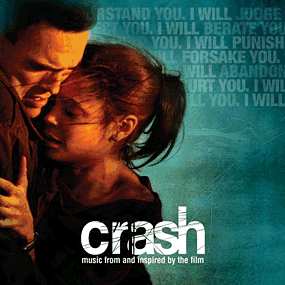
2. View the movie Crash
Crash is a brave film. It deals with race and our prejudices in a brutally honest way, forcing us to confront thoughts and feelings that we may not be comfortable with. Don Cheadle says that the film aims to uncover ‘what we don’t say, what is below the surface’.

Crash involves the prejudices of a range of different groups in society, looking at how they view each other and the consequences of this. It is not afraid to deal with the prejudices of minority groups as well as the more dominant sectors of society.


3. Discussion Questions
  • What shocked you most in the film and why?
  • What did you laugh at in the film? Why?
  • What racial stereotypes were familiar to you. How did the film use physical appearance and behavior to show these stereotypes?
  • Not all the discrimination in the film, Crash is based on race. What other types of harassment do you see and how are you made to feel about it?
  • Some we viewed positively from the start and some negatively. How were your opinions of those characters challenged as the film progressed?
  • This film was made as a reflection of our society. Do you participate in any of the types of stereotyping or prejudice you saw in the film?
4. Reflecting on Race and Prejudice in America.

**Use the rubric to help your formulate level 4 responses.**


    Wednesday, February 4, 2015

    Jazz is about Freedom | Kicking off Black History Month

    1. DO NOW | In the comment's section below, answer the following questions:
    • How many hours a week do you think you spend listening to music/How much time do you spend making music yourself?
    • Who are the recording artists you like and listen to the most?
    • Have any of these artists made you aware of a problem or issue in our society? If so, what problems or issues has the music brought to your attention? How does the song or music make you feel about the issue? What role do the lyrics play? What role does the music itself play?
    2.  Make a copy of Jazz is Freedom

    3. Billie Holiday's Strange Fruit (1938).

    Thursday, January 29, 2015

    Eric Garner

    1. Do Now | Read the following press conference by New York City Mayor Bill de Blasio the morning after the Staten Island grand jury decision:


    “It’s a very emotional day for our city. It’s a very painful day for so many New Yorkers. That is the core reality. So many people in this city are feeling pain right now. And we’re grieving, again.”
    What the Mayor is referring to? Why was it an emotional day for the city?
    What do you know about what happened to Eric Garner this summer?
    What do you know about the grand jury decision in the case?


    2. Open new document and title: Eric Garner Case


    5. Think-Pair-Share. How do you feel about the footage you've just seen?

    Wednesday, January 28, 2015

    Study, Discuss, & some Spoken Word.

    1. Study | Geography of the United States.

    2. Discussion | What happened in the video Mon/Tues? How has racial discrimination in higher education changed over time? What does it look like now? What is the K-12 role? How do these issues relate to the way statics indicate our society treats our minority children?

    3. Spoken Word | Javon Johnson

    Monday, January 26, 2015

    Seven Decades of Race and Higher Ed

    Good Morning Tributes,

    I had an emergency come up and had to take the day off. In your feedback from last unit, you asked if we could have an accompanying move as we study Ferguson, Civil Rights and Race equality in the United States. So, today seems like a great day for Admissions on Trial: Seven Decades of Race and Higher Education!

    Email me if there's an issue. I should see it on my phone pretty quickly.

    Background:
    Admissions on Trial: Seven Decades of Race and Higher Education delves into the history behind Fisher v. Texas, one of the most-watched Supreme Court cases to negotiate race and access to higher education. The film, produced by KLRU in Austin Texas, weaves anecdotes and expertise of students, university admissions personnel, activists, lawyers and others into a framework to understand the complexities of Affirmative Action, diversity and equality, and the effects of Fisher v. Texas on higher education in the future.


    Thursday, January 22, 2015

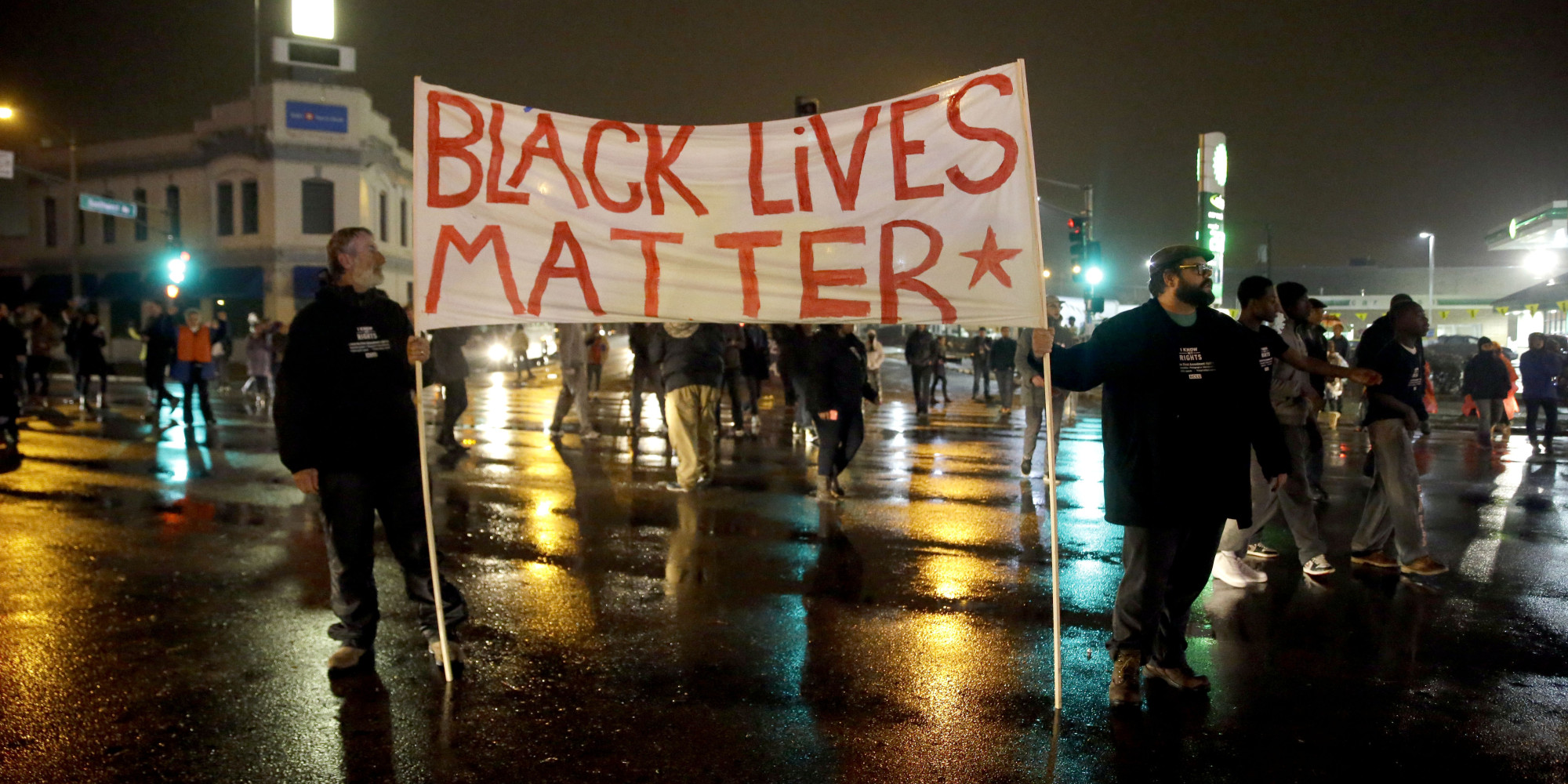
    Intro to Ferguson

    1. Sheppard Geography Games | Since we are going to study Ferguson, take 20 minutes to study the Geography of the United States.

    2. Google Moderator | Temperature Check 
    • What do you know about what happened in Ferguson, Missouri, in August? 
    • Do you know the name Michael Brown? What do you know about him? What happened to him? 
    • What has happened in Ferguson since then? 
    • Where are things at now?
    3. Timeline of Events in Ferguson, Missouri.

    4. Video | "Peaceful Protest spill into Chaos"


    5. Think-Pair-Share | How do you feel about the events in Ferguson?

    6. Group Read & Discussion |

    Each group will be assigned a reading from Fox News, The Guardian and The Nation, then discuss the information, guided by the questions below each excerpt. In 10-15 minutes we will reconvene the whole class

    7. Whole Class Discussion | Discuss what we read and talked about in our small groups. Think about our readings in the context of:
    • racial disparity and power
    • segregation
    • profiling
    • discrimination
    • other related issues that you can think of

    Wednesday, January 21, 2015

    Unit Selection Results | Charlie Hebdo Briefing

    1. Unit Selection Results | Here's what you want to learn next:

    2. We will begin our Ferguson tomorrow. In the meantime, we will do Charlie Hebdo brief for those of you who were interested in the shooting that happened in France this month: 


    3. Discussion: 


    5. Discussion: How should Charlie Hebdo's respond?


    7. Discussion: 
    • Use of Muhammad in the Media-- Freedom of Speech or Religious Persecution?
    • What do we think about Charlie Hebdo's response?

    Tuesday, January 20, 2015

    Geography Review & Next Unit Selection

    1. Sheppard Geography Games | Review any continent you feel weak in-- Africa, Europe, Middle East. If you're solid on those, you can start on North America/United States.

    Thursday, January 15, 2015

    Goal Setting | Every Revolution Begins with a Spark

    Step 1: DO NOW | Finish up your 2 stanza rewrite of We Didn't Start the Fire... aka Catching Fire ;)

    Helpful hints:

    • Make a list of things you want to accomplish, places you'll visit, people you'll meet, hobbies/passions you want to undertake.
    • Pick a stanza and count out the syllables, find the Rhyme scheme.
    • Ms. Kelly's 1 stanza example:

      Speak more, TEDx, Startup, Edtech
      Archery, Traveling, Open my own Company,
      Have kids, provide for, help my parents, take the floor
      All children, equal ed, one day, make it big.

    Step 2: POST | your version in today's comment section.

    Step 3: CHECK | out other people's versions. Give at least 3 positive comments to 3 other students.

    Step 4: QUIZLET | Review vocab from semester one. At the end of class, we'll do team Jeopardy to make sure we are strong with our content and ready to move forward this semester! :)

    Step 5:  JEOPARDY | Semester 1 Review

    • Agree on a team name
    • Team who picks gets 20 seconds to answer
    • If your team is wrong/incomplete, question opens up for all teams.

    Wednesday, January 14, 2015

    Happy New Year | We Didn't Start the Fire

    1. DO NOW | Tell me 3 things you accomplished/are proud of in 2014.

    2. LYRICS | Make a copy.  The lyrics of this song refer to headline events between 1949 to 1989. As we listen to the song, highlight the events or people you recognize on your document.

    3. VIDEO | We Didn't Start the Fire


    4. DISCUSSION | What events or people you recognize?

    5. REFLECT | Think about your life over the last 10 years? What’s been going on in that’s noteworthy?

    6. HOMEWORK |  Imagine It's 2025. What events, people, and places have transpired in your life? When you see the person next to you for the first time in a decade, what will you tell them when they ask, "So uh, what've you been up to since High School?"

    Write at least two verses of your own version of Billy Joel’s ” We Didn’t Start the Fire ”... perhaps one about Catching Fire? Speading change? What will be sung about your accomplishments.

    It must follow the rhythm and rhyme scheme of the original song. So feel free to play it over and over! :)